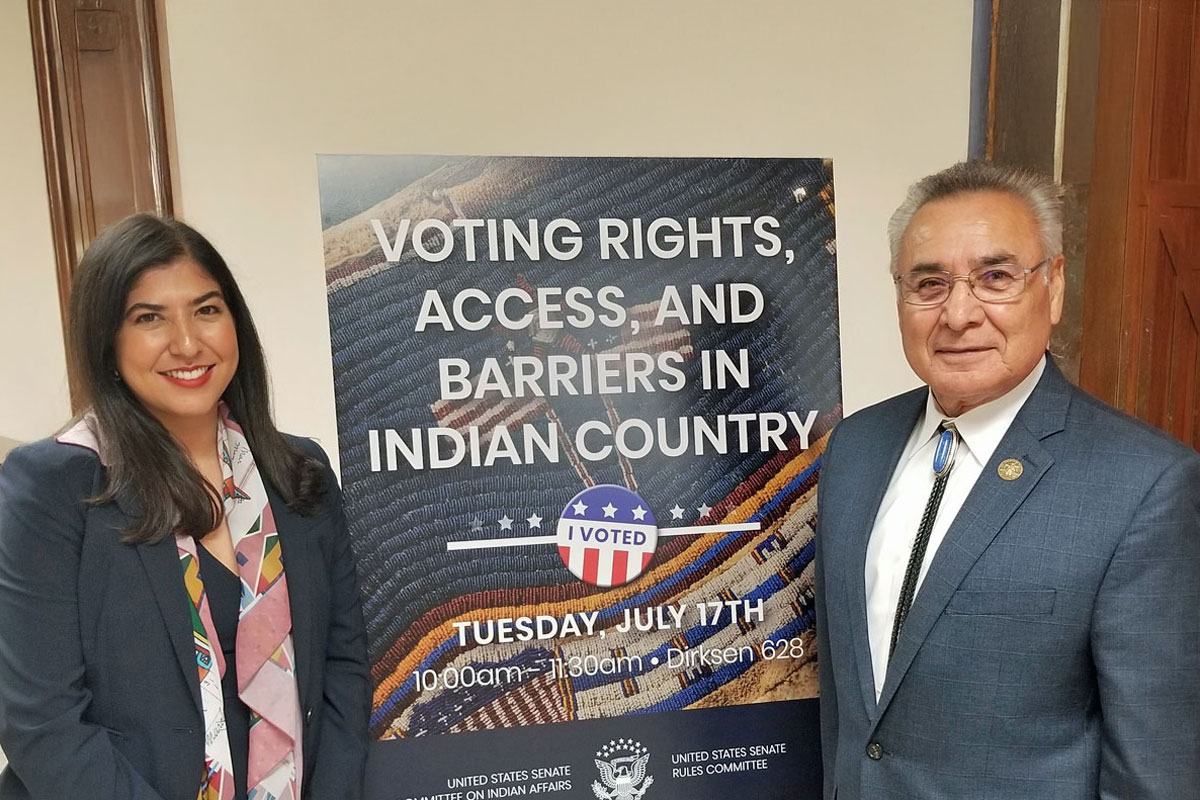
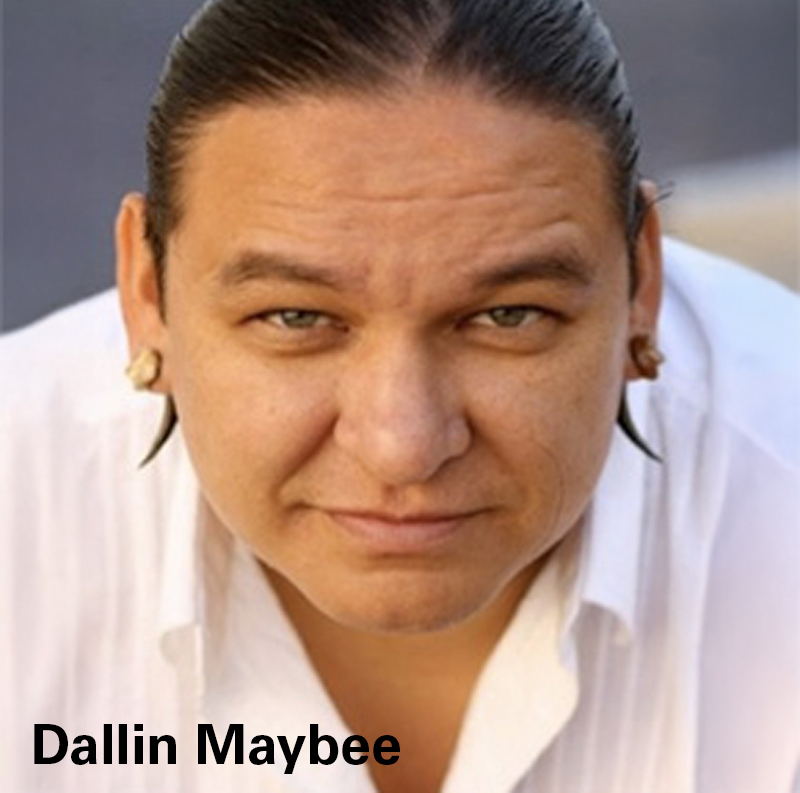
“If you want a truly representative government, you have to elect people that will represent your community’s interests. Tribal nations have long been excluded from that—from true representation,” says Dallin Maybee (Seneca and Northern Arapaho), interim director of development for Native American Rights Fund (NARF).
“What does it mean to have tribal sovereignty? Much of the wealth of this country was built on—and is continuing to be built on—Native natural resources on Indigenous lands. Much of it was never ceded, so when we want to assert our treaty rights, there are specific reasons why.”
Dallin Maybee (Seneca and Northern Arapaho)
Interim Director of Development, NARF
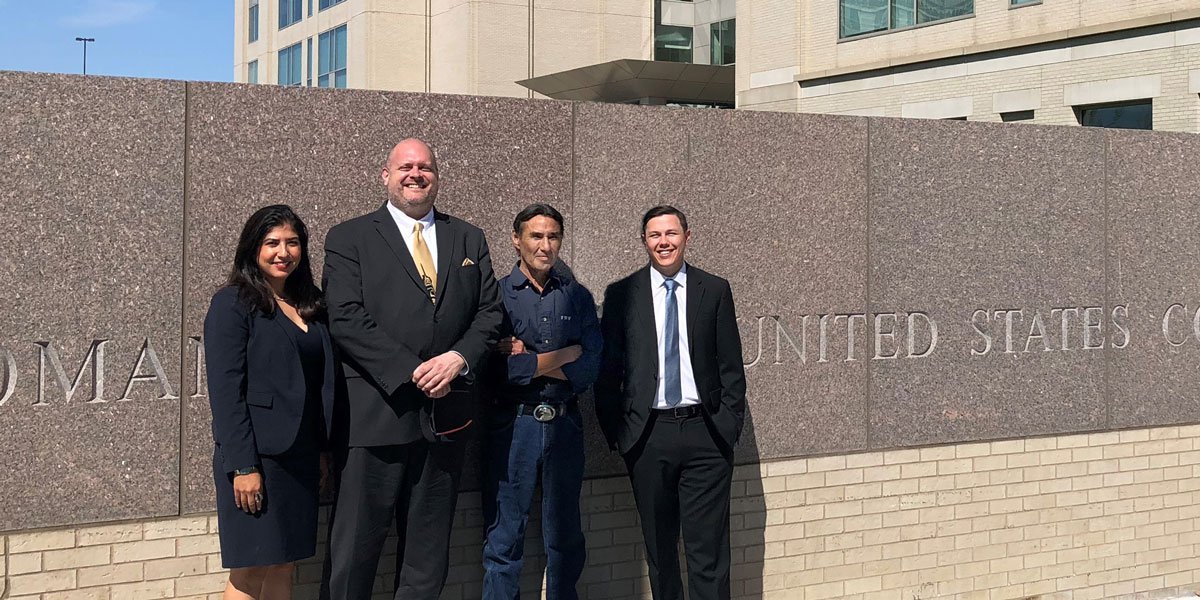
Left to right: NARF senior staff attorney Jacqueline DeLeon (Isleta Pueblo), former NARF attorney Dan Lewerenz (Iowa Tribe of Kansas and Nebraska), tribal member Elvis Norquay (Turtle Mountain Chippewa), and NARF deputy director Matthew Campbell (Native Village of Gambell) appear at the US Supreme Court for a voting rights case. Photo courtesy of NARF.
Working to overcome voting rights obstacles is a goal of NARF and NAVRC. Civic participation—having a real voice in governance decisions—must be part of eliminating policies designed to discriminate against Native Americans.
“Sometimes elections are decided by 500 or 1,000 or 2,000 votes. A Native voting block of 8,000 people can absolutely help turn elections, but we need to be able to participate.”