SKIP TO MAIN

Policy and Community Insight | May 13, 2026

Dwindling Funds: Immigration Enforcement Policy Strains Family Finances and Local Economies

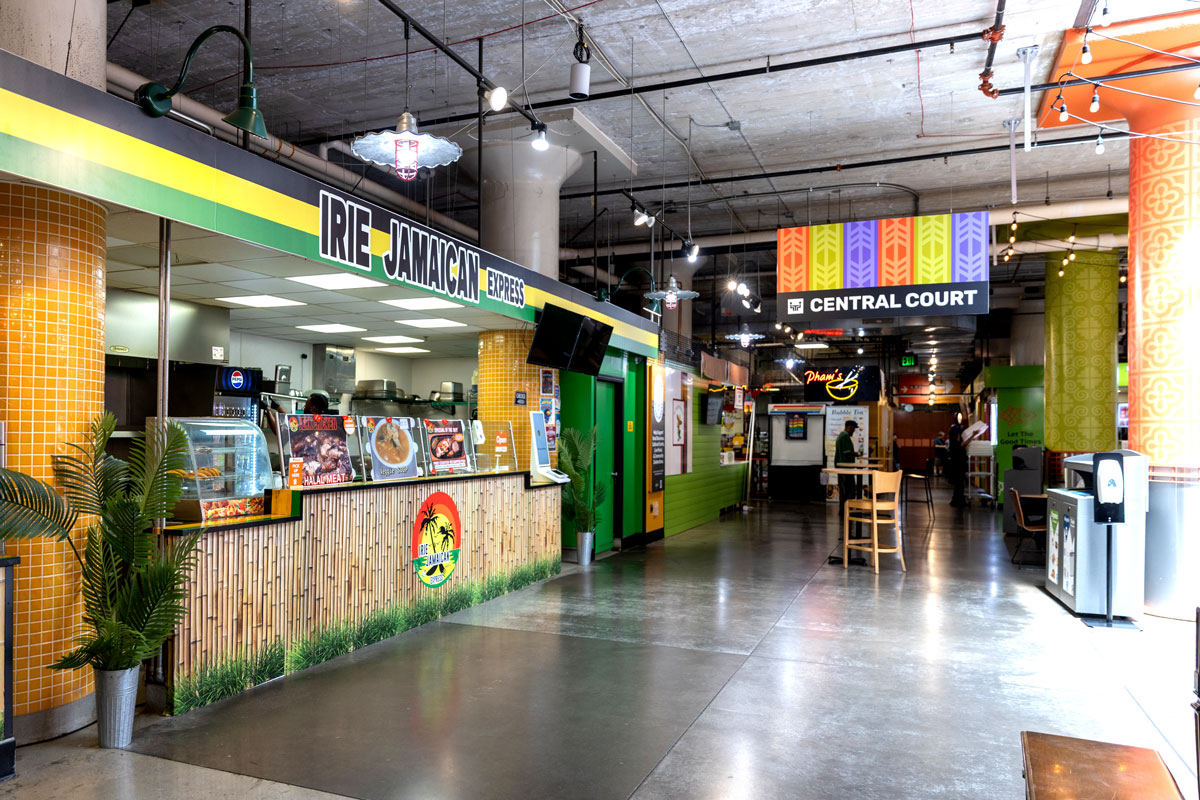
Midtown Global Market
Midtown Global Market, a multi-ethnic themed public marketplace in Minneapolis that’s home to more than 40 small businesses, is a flagship effort of nonprofit lender Neighborhood Development Center (NDC).

MONTHS AGO, MONTHA CHUM PICKED UP HER PHONE AND HEARD AGAIN THE WORDS THAT HAVE BECOME ALARMINGLY FAMILIAR.

“They’ve taken my husband,” the caller said, panicking. “I don’t know where he is.”

As executive director of MN8, an immigrant-led organization that supports Southeast Asians fighting deportation, Chum understood what would likely follow: the anguish of a loved one’s detention and potential deportation, lost paychecks, rent and mortgage payments coming due, and legal fees capable of draining savings.

Immigration enforcement’s impacts extend far beyond the hundreds of thousands of families around the country traumatized by detentions. Commercial corridors lined with immigrant-owned businesses thin out when employees and customers stay home. Families trim spending as workers decline shifts. Even non-immigrant businesses feel pinched when communities avoid public spaces. US Immigration and Customs Enforcement (ICE) activities can quickly become an economic shock to households, businesses, and entire communities.

The Minneapolis–St. Paul metro area offers a recent example. During the three-month Operation Metro Surge, a large-scale and violent enforcement effort by ICE, the economic damage in a single month to Minneapolis alone reached more than $203 million, according to a mid-February report by the city’s emergency operations center.

“Sometimes people who are detained can’t go back to work. Families lose income overnight. And then they’re draining savings for legal fees and emergency planning.”

Montha Chum
Executive Director, MN8

THE THIRD STORY IN OUR SERIES

When Policy Hits Home:
The Impact on Community

What happens when income vanishes?

For Chum, whose advocacy began after her own brother was detained years ago, the pace has shifted from occasional crises to constant triage.

“This year has just been rapid response,” she said. “Every morning, I’m waking up to a call or a text.”

For affected families, the trauma may be sudden, but the financial recovery can stretch long beyond detention. “Sometimes people who are detained can’t go back to work,” Chum said. “Families lose income overnight. And then they’re draining savings for legal fees and emergency planning.” MN8 helps as it can, but it can’t pay everybody’s legal fees.

Get the full “When Policy Hits Home” series

Researchers at W.E. Upjohn Institute for Employment Research and North Star Policy Action estimate Twin Cities workers lost $106 million in wages during Operation Metro Surge. In Minneapolis, one in six residents—largely immigrants, refugees, Native Americans, Black residents, and other people of color—was in urgent need of food assistance in mid-February, according to the city’s emergency operations center.

“That’s what people don’t see,” Chum said. “Even if someone comes home, the damage is already done.”

Midtown Global Market, Minneapolis

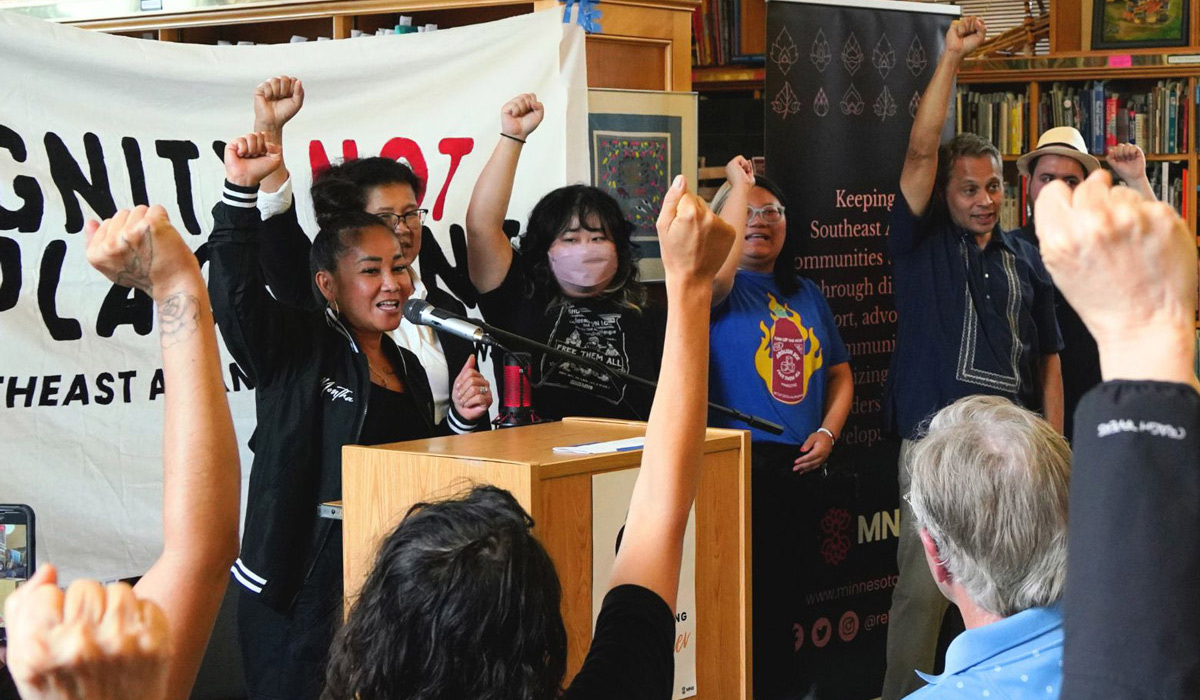
MN8’s executive director Montha Chum speaks during the organization’s “Dignity Not Displacement” press conference at St. Paul’s East Side Freedom Library in August 2025. Photo by Michelle Mei.

The cost to communities is long term, too.

In the Twin Cities, immigrant entrepreneurs anchor some of the region’s most vibrant commercial districts, with Latino, Somali, and Southeast Asian business owners operating restaurants, markets, and service businesses that create jobs and circulate dollars locally.

Many of these entrepreneurs turned for support to Neighborhood Development Center (NDC), a nonprofit lender serving largely disinvested groups. “The communities we serve are powerful economic drivers,” said Renay Dossman, NDC’s president and chief executive officer. “When they cannot operate how they typically would, it impacts their operations, revenue streams, and everything in between. This has a ripple effect.”

Enforcement activity, she said, changed behavior.

Some restaurants shifted to locked doors and online ordering only. That defensive move may have reduced exposure, but it also eliminated walk-in traffic, tips, and impulse purchases—revenue small businesses and their employees depend on.

Dossman said, “The economic toll is significant. At the height of the increased federal immigration enforcement, some of the businesses we support saw their revenue cut by more than half.”

“The communities we serve are powerful economic drivers. When they cannot operate how they typically would, it impacts their operations, revenue streams, and everything in between. This has a ripple effect.”

Renay Dossman
President and CEO, NDC
The government and our economy also lose out.

Non-immigrant businesses are affected as well. In Minneapolis, 80 percent of hotels, retailers, and other businesses responding to a survey by the city’s convention and visitors bureau reported canceled, postponed, or reduced sales during the crackdown.

The impact is not limited to Minnesota. Similar patterns are seen in Idaho, another state in the Foundation’s region, where immigrant labor underpins industries from agriculture to construction.

“Regardless of immigration status, people are not frequenting stores, restaurants, or going out the way they used to,” said Leo Morales, executive director of the American Civil Liberties Union of Idaho (ACLU of Idaho). “US citizens are afraid too.”

Foreign-born workers make up less than 10 percent of Idaho’s workforce. Their removal would cost the state more than 55,000 jobs and $5.1 billion in annual economic output, according to The Story of Idaho Labor Markets: An Economic Analysis of Foreign-Born Contributions. The loss of construction workers could exacerbate the growing housing crisis in the state, pricing most households out of the market for a median-priced home.

Immigrants remain integral to the US economy. In Idaho, undocumented immigrants pay $72 million annually in state and local taxes, Morales said. Nationally, undocumented immigrants paid $96.7 billion in federal, state, and local taxes in 2022, according to the Institute on Taxation and Economic Policy. Nearly $60 billion of that went to the federal government.

“When a large sector of the population changes its spending habits,” Morales said, “it has consequences.”

NDC Latino Business Week

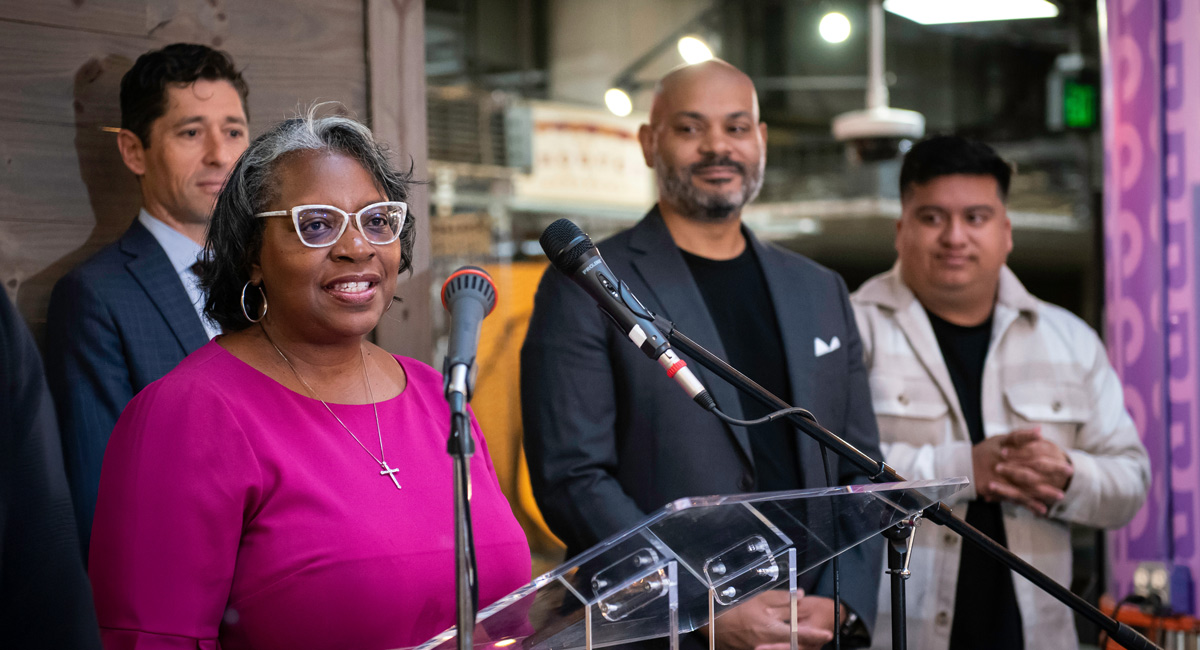
NDC’s president and CEO Renay Dossman is joined by (left to right) Minneapolis Mayor Jacob Frey, Minneapolis City Council President Elliott Payne, and Minneapolis City Council Member Jason Chavez at Midtown Global Market during the October 2025 Latino Business Week kickoff. Photo courtesy of NDC.

Nonprofit help is important for immigrants and communities.

The strain extends beyond storefronts to the financial institutions that support small businesses.

NDC is a community development financial institution, or CDFI, created to channel capital into neighborhoods long underserved by traditional banks. Alongside loans, the organization provides technical assistance, helping entrepreneurs with bookkeeping, business plans, and marketing strategy. Such support contributes to lower default rates than those experienced by many commercial banks.

New federal requirements have introduced complications. Certain federal lending programs now demand that CDFIs collect immigration status information, data NDC had previously avoided gathering. While the organization can draw on alternative capital sources in some cases, even the perception of data collection can unsettle clients already wary of scrutiny.

“We’re still getting loan inquiries every day,” Dossman said. “People still want to build their dreams.”

Communities demand deeper change.

The woman who called MN8 months ago has reunited with her husband. MN8 located him, helped the family raise funds, ensured that the couple could speak by phone each day, and coordinated legal assistance. His release came three months later.

As enforcements continue, what concerns Morales is the economic and human toll they demand.

Most Americans agree that the immigration system needs reform, he noted. “There are Idahoans and Americans who fundamentally believe what is happening now is not right,” he said. “We need a different system, one that honors the humanity of all people.”

“There are Idahoans and Americans who fundamentally believe what is happening now is not right. We need a different system, one that honors the humanity of all people.”

Leo Morales
Executive Director, ACLU of Idaho

In Minnesota, Idaho, and elsewhere, phones keep ringing at immigrant support organizations.

Each call potentially signals another family losing income, another shop closing its doors, another neighborhood growing quieter. They also prompt a wave of support, ranging from rental assistance and food deliveries for families to help with revised business plans and loans for businesses.

These measures help those who make those calls. But while detention may last weeks or months, the economic aftershocks linger much longer.

Share This Page

Reporting on this story was provided by freelance journalist Kerri Westenberg.

More from this series

Lingering Fear: Immigration Enforcement Tactics Harm Families—and Communities Respond

READ THE STORY

Iowa farm

Sowing Uncertainty: Federal Policies Strain Farmers

READ THE STORY