SKIP TO MAIN

Policy and Community Insight | April 15, 2026

Sowing Uncertainty: Federal Policies Strain Farmers

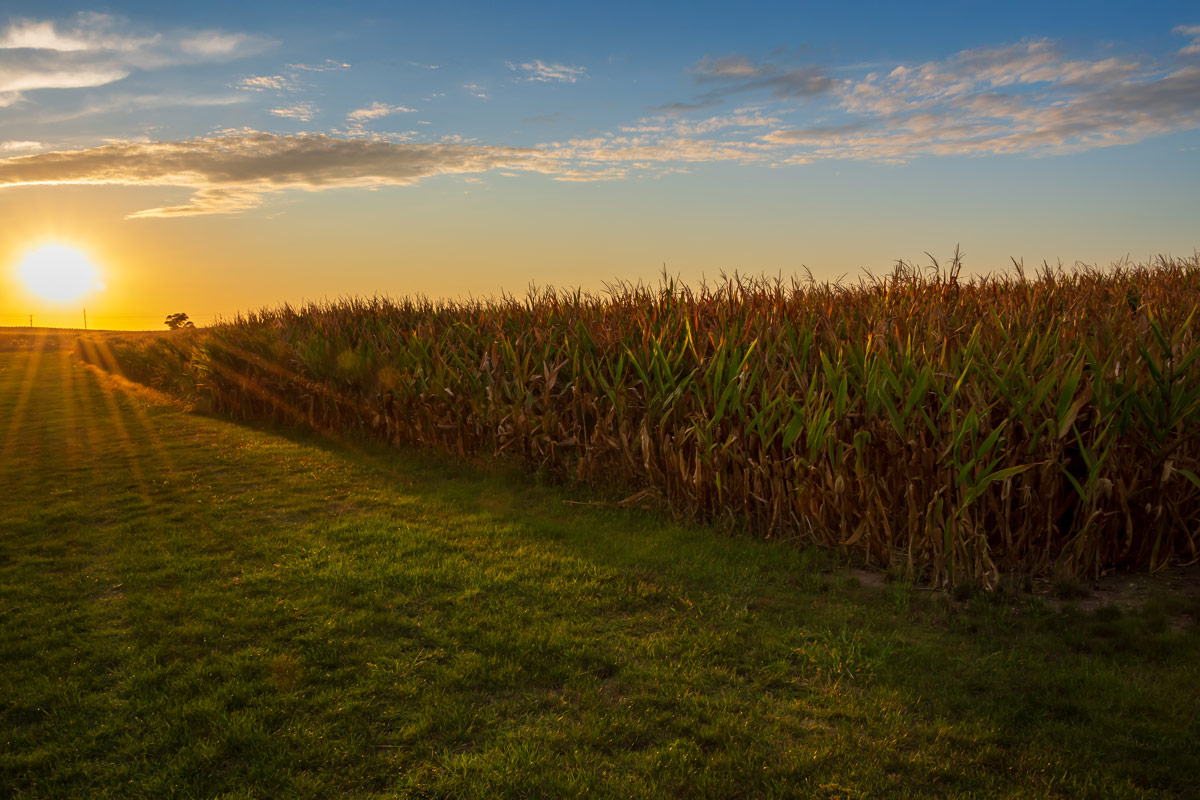
Iowa farm
An Iowa farm’s cornfield awaits harvesting as the sun sets on another day.

FOR FARMERS ACROSS RURAL AMERICA, WORRY CAN SPROUT OVERNIGHT.

Josh Manske of Algona, IA, knows this firsthand. He joined his fifth-generation family farm seven years ago, drawn by the land, his rural community, and the satisfaction of growing goods the world needs. Threatening these treasures is something he can’t control: the price of corn.

Massive staff cuts at the US Department of Agriculture (USDA) have raised concerns, including brain drain. In January, the department released a crop production report that broke records for corn, both for per-acre yields and acreage planted. It stunned Manske. “The report left some of us scratching our heads,” he said, noting that many of the farmers he knows in Iowa and Minnesota had battled southern rust disease during the growing season.

The market reaction was swift and staggering. Corn prices dropped more than 20 cents per bushel in a single day. “That can be the difference between making it and breaking it,” Manske said.

The shock to corn markets is only one symptom of deeper stress spreading across farm country. Federal budget cuts, agency layoffs, and policy shifts are delaying loans, reducing services, and stripping away support for farmers who already operate on narrow margins. Now rising costs for fertilizer, driven by the effective closure of the Strait of Hormuz amid conflict with Iran, mark another economic blow for farmers already operating on narrow margins.

USDA cuts hit farmers from all sides.

Last year, the USDA lost nearly one-fifth of its workforce. One of the hardest-hit agencies was the National Agricultural Statistics Service, which produced the crop report that shocked the corn market. Thirty-four percent of its employees departed.

Many fear a replay of the 1980s Farm Crisis is ahead—or underway.

THE SECOND STORY IN OUR SERIES

When Policy Hits Home:
The Impact on Community

The department also reduced Supplemental Nutrition Assistance Program (SNAP) benefits. A planned $186 billion cut over the next decade will further shrink the program. As households scale back food purchases, pressure on farmers will increase amid an already dire economic situation with potential income drops in the tens of billions. The USDA estimates that nearly one-quarter of every dollar spent on food for the home flows to farmers.

Axed entirely were the Local Food Purchase Assistance and Local Food for Schools programs. Like SNAP, these had created local markets for farmers’ produce. USDA also terminated millions of dollars in grants already awarded but not yet distributed to organizations supporting small farmers.

Staffing at the Farm Service Agency (FSA) headquarters dropped 24 percent. Farmers rely on local FSA county offices for operating loans and technical assistance. Now, paperwork moves more slowly, questions go unanswered, and funds take longer to arrive. These delays can derail an entire planting season.

Get the full “When Policy Hits Home” series

“If you can’t get your operating loan in time, you can’t buy your seeds, your fuel, your fertilizer, and you can’t farm,” said Scott W. Carlson, executive director of Farmers Justice Center, a legal advocacy group that sued the USDA over the rescinded grants. “It can be catastrophic.”

In 2025, as many of these budget cuts took effect, farm bankruptcies totaled 315, nearly 46 percent more than in 2024.

Carlson warned of a snowball effect as farmers sell land and property values fall since credit is tied to land value. Many fear a replay of the 1980s Farm Crisis is ahead—or underway. Manske noted that while the number of bankruptcies hasn’t reached the worst of those years, “You can’t compare, because there are just a lot fewer farms now.”

blank plug

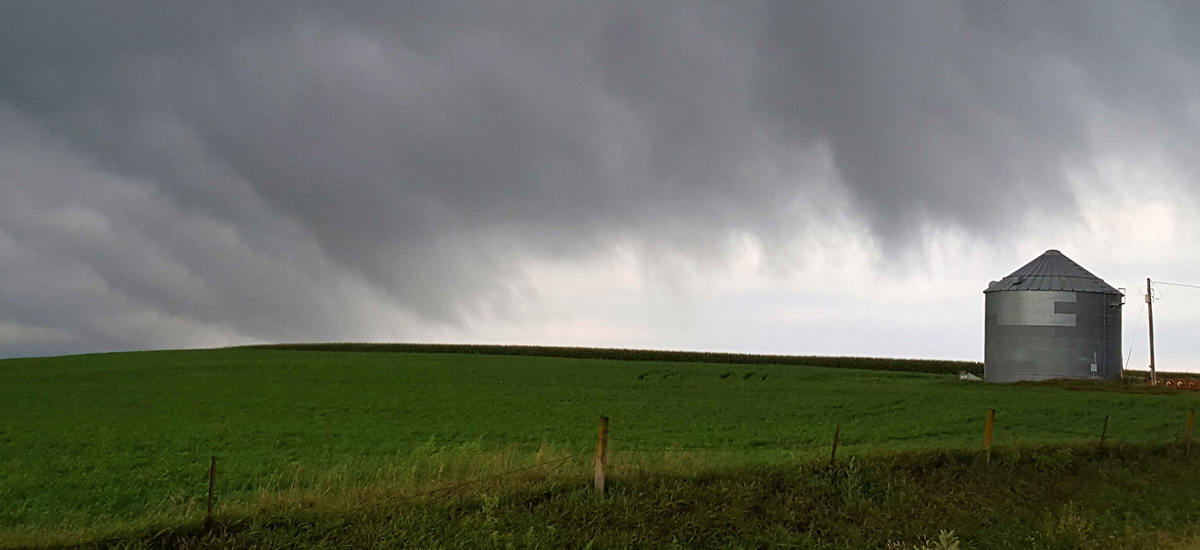
Stormy skies hover over a lone grain bin in Calhoun County, IA.

Contracting communities in farm country.

As farms consolidate, land shifts to large operators and investors rather than owner-operators. The result is fewer farmers, emptier towns, shrinking tax bases, and fewer local services.
Manske pointed to his own Kossuth County, IA. Over four decades, the population has fallen from roughly 22,000 to 14,000. He has witnessed schools merge, churches close, small-town businesses shutter doors, and towns dwindle. “That impacts your sense of community and your sense of identity,” he said. “You can’t equate that on a ledger sheet.”

Tariffs are pressuring commodity prices while raising the cost of essentials like tractors and replacement parts. John Deere and other equipment makers have downsized in places where families rely on off-farm income to survive.

As farms consolidate, land shifts to large operators and investors rather than owner-operators. The result is fewer farmers, emptier towns, shrinking tax bases, and fewer local services.

Further fraying the fabric of rural life, Rural Development—a USDA agency that finances key quality-of-life investments such as housing, broadband expansion, and small-business loans—saw staffing reduced by 36 percent. Slower approvals and fewer resources mean delayed infrastructure projects, stalled housing improvements, and tighter credit for entrepreneurs. These setbacks hurt towns struggling to retain residents and serve farmers.

Zach Ducheneaux (Cheyenne River Sioux), a former administrator of the USDA’s Farm Service Agency, a South Dakota rancher, and a former Northwest Area Foundation board member, said that essential infrastructure for such basics as electricity and hospitals could falter in some rural places. He likens cuts at the USDA to “a cattle producer who decides their cows aren’t making enough money, so in order to bolster the bottom line, they feed the cows less. It doesn’t work.”

Even tribal colleges and universities (TCUs), often hubs of economic and community stability as the largest employer in their areas, are feeling pinched. These bright spots provide education to Native and non-Native people alike, workforce training, and broadband access to students and community members in regions known to lack it. But budget cuts have come to them, too.

blank plug

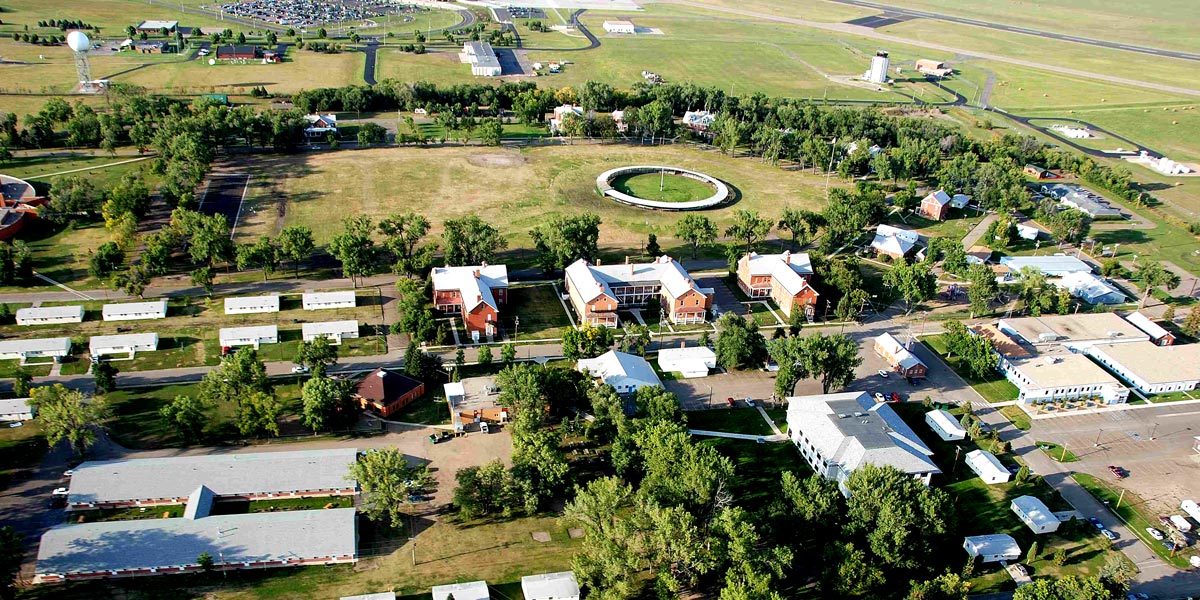
United Tribes Technical College in Bismarck, ND, owned and governed by the state’s tribal nations, addresses workforce development and higher-education needs. Its students, faculty, and staff come from tribal lands throughout the US and Canada. Photo courtesy of the American Indian College Fund.

Nonprofits relieve some strain.

Nonprofits are stepping in, but cannot replace federal support. The American Indian College Fund’s $6 million bridge fund is helping TCUs retain staff and maintain facilities, even as the administration and Congress often fall short of meeting the government’s treaty obligations to fully fund tribal higher education.

Farmers Justice Center recently won a preliminary injunction restoring funds to five organizations that support farmers. The temporary ruling allows many farmers to plant and harvest crops, retain access to markets, and benefit from educational programs. The group is now fighting to extend that relief permanently to the hundreds of organizations that failed to receive their grant funds.

Nonprofits and groups fighting to keep the region vibrant know the stakes—for the people and the country. “The way things are going now,” said Scott W. Carlson, executive director of Farmers Justice Center, “that is not a sustainable rural America.”

Farmers are accustomed to risks brought on by drought, disease, and volatile markets. But as federal support wanes and uncertainty deepens, planting becomes a wager not just on weather and prices, but on programs that have long supported them and helped stabilize markets, grocery bills, and the broader economy.

Nonprofits and groups fighting to keep the region vibrant know the stakes—for the people and the country. “The way things are going now,” Carlson said, “that is not a sustainable rural America.”

Share This Page

Reporting on this story was provided by freelance journalist Kerri Westenberg.

More from this series

Lingering Fear: Immigration Enforcement Tactics Harm Families—and Communities Respond

READ THE STORY