SKIP TO MAIN
NWAF.org
President's Corner
    • About
    • History
    • Wealth Acknowledgment
    • Values
    • Financials
    • Staff
    • Board
    • FAQs
    • Policies
    • Approach
    • Priority Communities
    • Justice, Equity, Diversity, and Inclusion
    • Native-Led Work
    • Native CDFIs
    • Impact Investing
    • Our Grantmaking
    • Grant Search
    • Grant Listings
    • Current Grantees
    • For Grantseekers
  • Engage
  • News & Insights

News & Insights


Policy and Community Insight | June 10, 2026

Shaken Faith: How Federal Cuts Undermine Trust

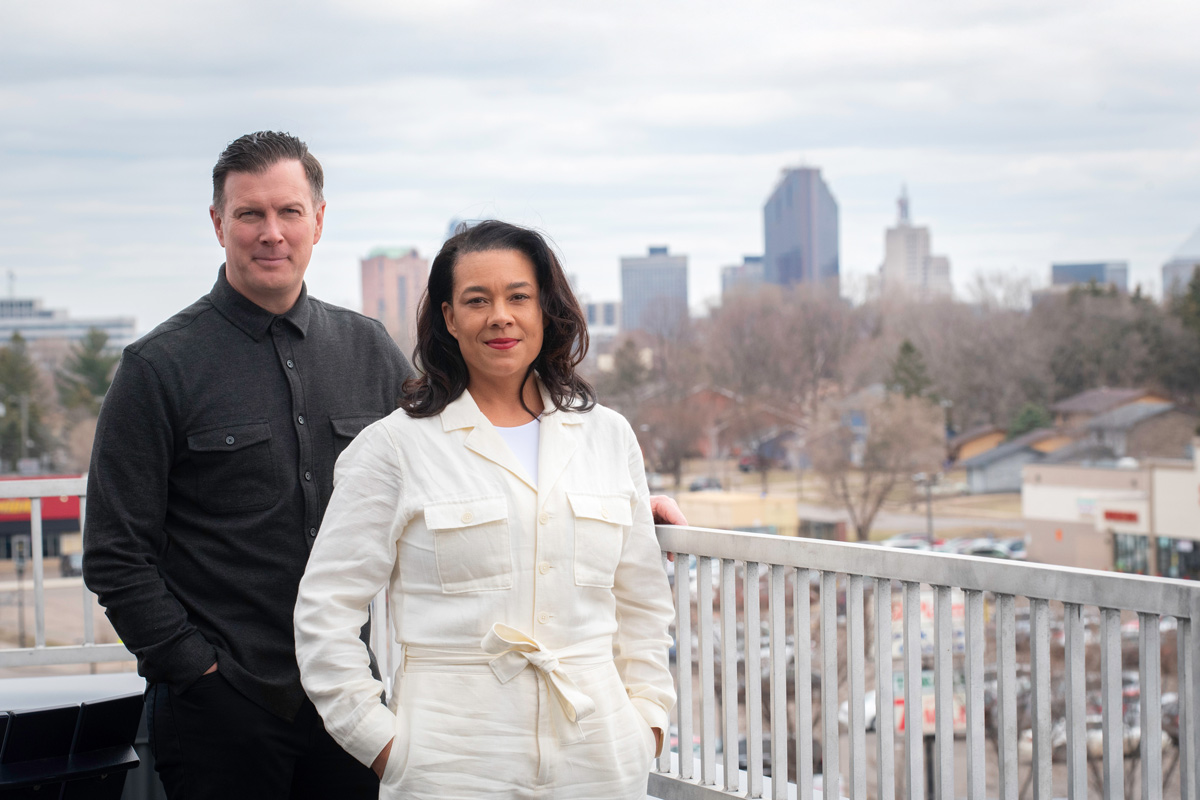
Adam and Zahra Iliff, Vessyll co-founders
Zahra Iliff (right), co-founder and chief executive officer of Vessyll, with Adam Iliff, co-founder and chief operating officer of Vessyll. Photo by Bruce Silcox.

THE RIPPLE EFFECTS OF CUTS REACH BEYOND DISMANTLED FUNDING TO DISRUPT THE ABILITY TO THRIVE IN THE FUTURE.

For Zahra Iliff, 2025 was shaping up to be a breakout year.

The chief executive officer and co-founder of Vessyll, an energy storage company in St. Paul, MN, had mapped out a hiring plan to meet growing demand for the company’s batteries. New clients were lining up. A demonstration project in the Twin Cities would showcase the technology in action. And after more than a year of development, work was set to begin on a major installation near the shore of Lake Superior, providing clean energy for a tribal community.

Then everything changed.

In early spring 2025, a newly imposed 145 percent tariff raised the price of imported materials needed to manufacture Vessyll’s batteries. Soon after, the US Department of Energy (DOE) canceled roughly $30 billion in loans and cut staff, effectively sidelining its loan program office. As a result, five potential new customers, representing about 85 percent of the company’s project pipeline, lost their funding source. Then the Lake Superior project was put on hold, and a federal grant supporting the Vessyll demonstration project was frozen.

Instead of hiring, Iliff cut one employee.

Her story is not uncommon. From small business owners to farmers and students, budget cuts, frozen grants, federal staffing reductions, and tariff shocks are shrinking balance sheets and upending plans. They are also shaking people’s faith in Washington. The Pew Research Center reported in December 2025 that only 17 percent of Americans trust the government to do the right thing “just about always” or “most of the time.”

The repercussions impact countless lives.

From small business owners to farmers and students, budget cuts, frozen grants, federal staffing reductions, and tariff shocks are shrinking balance sheets and upending plans. They are also shaking people’s faith in Washington.

THE FOURTH STORY IN OUR SERIES

When Policy Hits Home:
The Impact on Community

Policy decisions since the start of 2025 have disrupted the ability to thrive for the communities we serve. The purpose of this series is to provide vivid snapshots of what’s happening on the ground. The impact is changing by the day, so capturing the moments is crucial, both to document the impact and to give daylight to the experiences of people across the region.

Kevin Walker
President and CEO
Northwest Area Foundation
Farm country feels the shock.

In rural America, federal policy has long shaped bottom lines. Current policy changes, many of which have come swiftly and without warning, have underscored that reality.

From a government shutdown that delayed important crop reports to staff cuts at the US Department of Agriculture (USDA), programs and services that keep farms running have been delayed, curtailed, and eliminated. (We recently reported on that in “Sowing Uncertainty: Federal Policies Strain Farmers”).

Tariffs, though, have put farmers on edge.

Get updates, on the “When Policy Hits Home” series and more

Scott W. Carlson, executive director of Farmers’ Legal Action Group, said that these skyrocketing taxes affect not just large commodity farmers but smaller farmers, too. “If you’re a relatively low-income farmer, you’ve got old equipment that you need to keep running, and if you want parts to fix it, well, America doesn’t make those parts,” he said. “We’ve heard from farmers who have become more distrustful of government because of the tariff issue.”

CFAmbassadors_AiyannaTanyan_NykeshaNez_SashaDerenoff

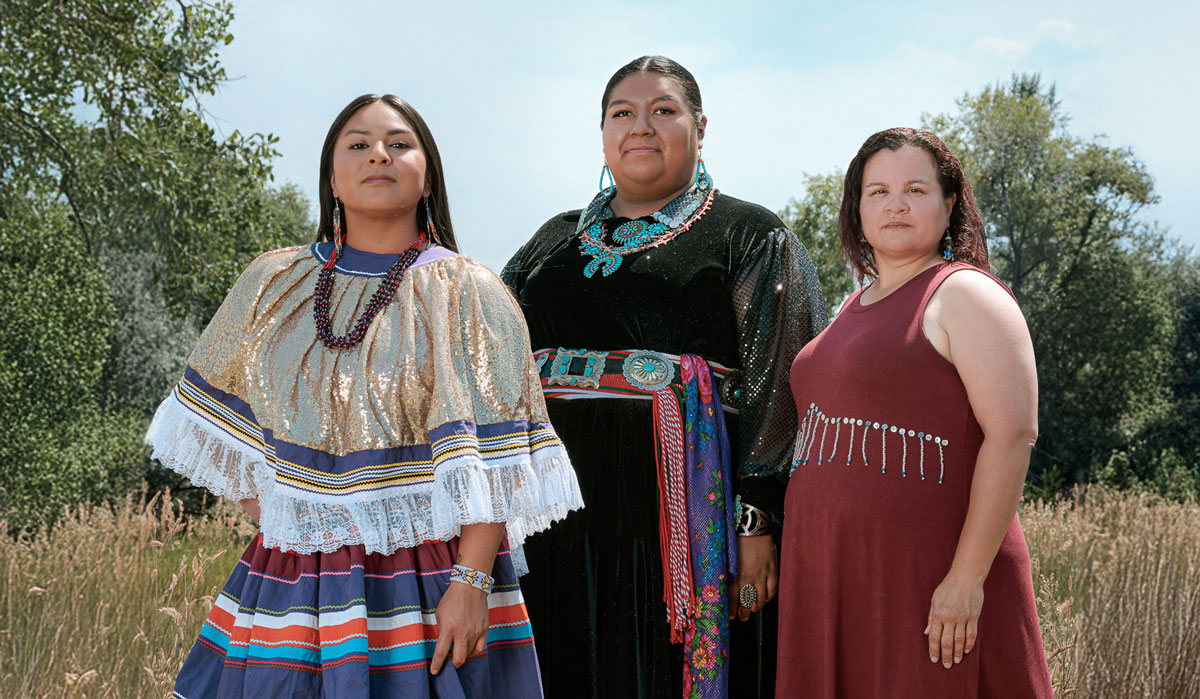
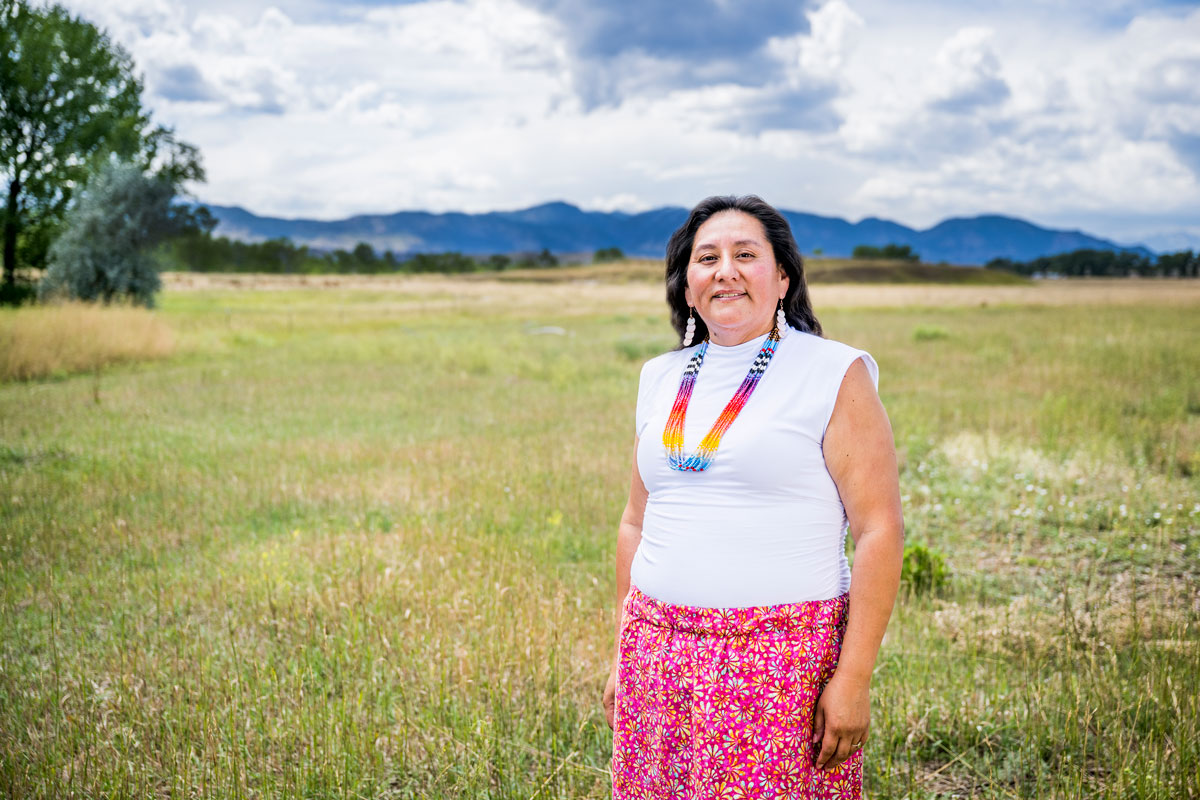
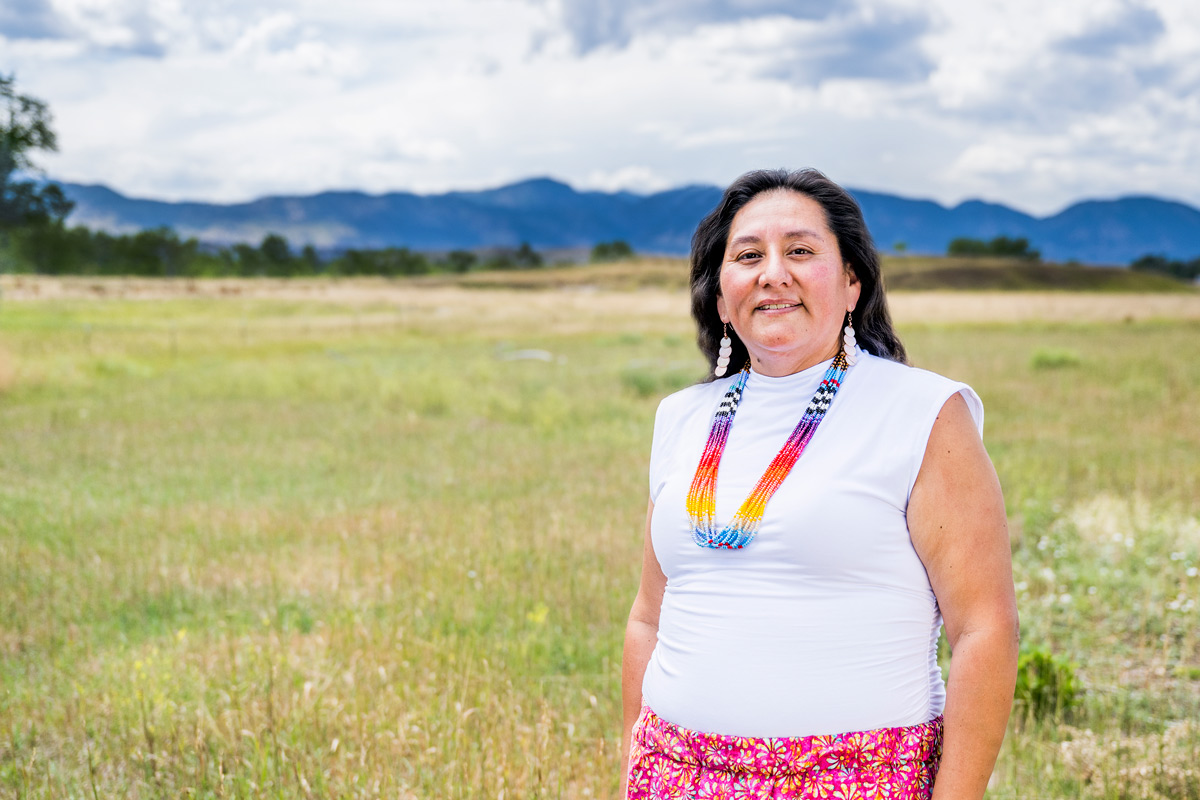
Sasha Derenoff (Tlingit) (far right), a student at Arizona State University and member of the American Indian College Fund’s 2025-26 Student Ambassador cohort along with fellow Student Ambassadors (from left), Aiyanna Tanyan (Seminole Nation of Oklahoma) and Nykesha Nez (Navajo Nation). Photo courtesy of the American Indian College Fund.

Native students shift plans and rethink public service.

Sasha Derenoff (Tlingit) has grown wary of government impacts, too.

The mother of eight is an engineering student at Arizona State University who began her higher education at Iḷisaġvik College, a tribal college in Alaska. In the village where she grew up, power during long winters comes largely from diesel generators, making electricity costly in a place with limited economic resources. Derenoff wants to change that equation by creating energy microgrids powered by wind or hydropower. “If you have a multipronged approach to electricity generation and a good place for storing it, you can have much lower costs,” she said.

But her path now feels less certain. Her internship with a private company that works closely with the DOE remains secure, but she recently saw how vulnerable jobs can be after the company was forced to restructure and reduce staff. It had lost DOE money.

“I’ve lost a little bit of my trust working in even government-adjacent areas. I no longer assume that programs will be stable long enough to plan a future around them.”

Sasha Derenoff (Tlingit)
Student, Arizona State University
American Indian College Fund Student Ambassador
Then a similar situation hit home. Her 24-year-old son, one of three children also in college, had been preparing for a cybersecurity summer internship that was eliminated when federal funds for the position were withdrawn.

“I’ve lost a little bit of my trust working in even government-adjacent areas,” she said. “I no longer assume that programs will be stable long enough to plan a future around them.”

Derenoff’s mindset is growing more common, according to Cheryl Crazy Bull (Sicangu Lakota). She is president and chief executive officer of the American Indian College Fund, which supports Native students like Derenoff and tribal colleges and universities. Some Native students seek work in the federal government in part to share their knowledge of treaty obligations and to help the government meet them, Crazy Bull said. Now with budget cuts and workforce reductions, “students who planned a career in public service . . . no longer see that as a path. They are rethinking whether being a public servant is in their future.”

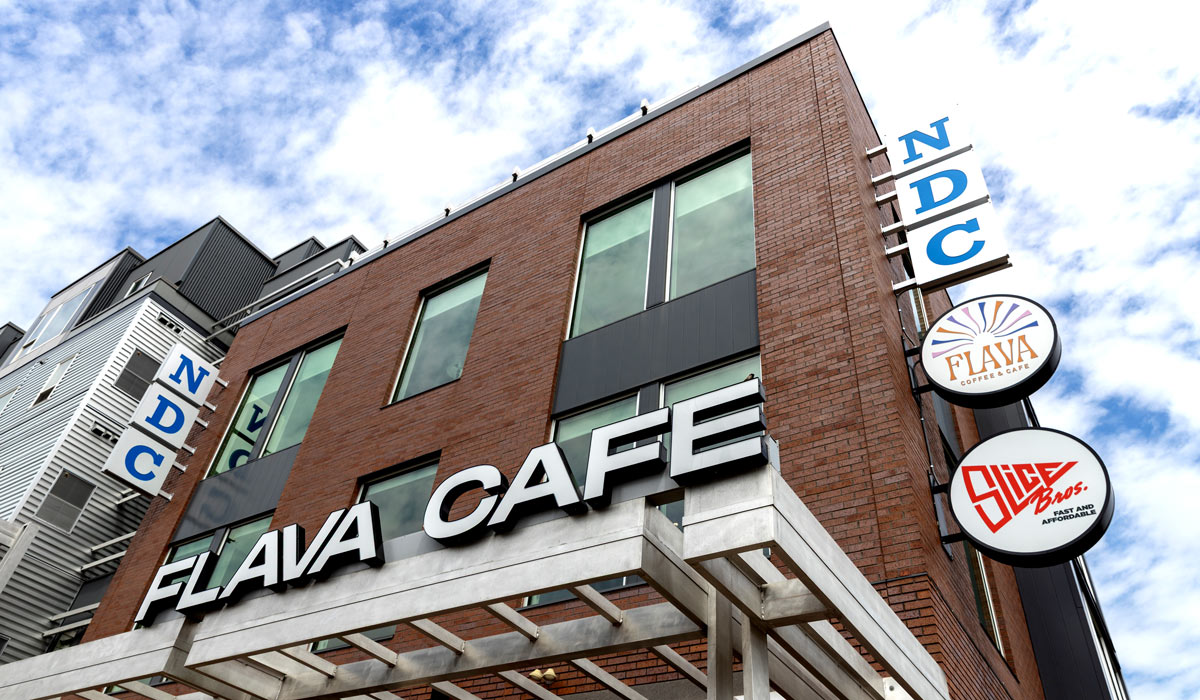
NDC headquarters, St. Paul

NDC’s headquarters in St. Paul’s Frogtown neighborhood brings together business, community, and housing under one roof.

Facing uncertainties, businesses play it safe.

At Neighborhood Development Center (NDC) in St. Paul, MN, staff had been preparing to help small businesses tap into new financing aimed at emission-reducing projects.

The nonprofit, which works with underserved entrepreneurs, had anticipated up to $10 million in federal funding for loans. The funds would have helped small businesses invest in energy-efficient equipment or renewable upgrades to strengthen their bottom lines. Vessyll’s demonstration project was one of the intended recipients.

“People were expecting that money,” said Renay Dossman, NDC’s president and chief executive officer.

Instead, funds have been withheld as the DOE shifts priorities, and NDC is looking for other funding sources.

“What we’re seeing now is more inconsistency,” Dossman said. “We want to keep doing the right work to push these industries forward, but it becomes harder when people are stripped of the capital they would have used to succeed.”

“What we’re seeing now is more inconsistency. We want to keep doing the right work to push these industries forward, but it becomes harder when people are stripped of the capital they would have used to succeed.”

Renay Dossman
President and CEO, NDC
The real cost is a quiet but growing gap in trust.

Consequences of sudden policy shifts do not always show up immediately. The damage can go unseen as people quietly question whether the government is a dependable partner. Some find part-time jobs instead of entering career-enhancing internships. Others conserve limited resources rather than invest to move ahead or simply fight to stay afloat.

Facing the chaos and uncertainty brought on by unpredictable government policy, people have been forced to put key aspects of their lives on hold, with far-reaching consequences. Farmers contend with tariffs and other strains that jeopardize their farms. Derenoff is reconsidering whether a career connected to federal programs will offer long-term stability. Iliff scaled back hiring.

The impacts on Iliff’s business have been significant, but she is undeterred.

“This sets us back, but it won’t stop us,” she said, vowing to rebuild her business.

For Iliff, and for millions of other Americans, a more secure future depends upon the government rebuilding trust and once again becoming a meaningful partner in business, education, agriculture, and other areas of American life.

Share This Page

Reporting on this story was provided by freelance journalist Kerri Westenberg.
More from this series

Midtown Global Market

Dwindling Funds: Immigration Enforcement Policy Strains Family Finances and Local Economies

READ THE STORY

Iowa farm

Sowing Uncertainty: Federal Policies Strain Farmers

READ THE STORY

Lingering Fear: Immigration Enforcement Tactics Harm Families—and Communities Respond

READ THE STORY

Tags: Economic Justice, Immigrant and Refugee Communities, Native American Communities, Rural Communities

MORE INSIGHTS FROM NORTHWEST AREA FOUNDATION

  • Policy and Community Insight | May 13, 2026

    Dwindling Funds: Immigration Enforcement Policy Strains Family Finances and Local Economies

    Read Article
  • Policy and Community Insight | April 15, 2026

    Sowing Uncertainty: Federal Policies Strain Farmers

    Read Article
  • Policy and Community Insight | March 11, 2026

    Lingering Fear: Immigration Enforcement Tactics Harm Families—and Communities Respond

    Read Article

INSIGHTS IN YOUR INBOX

NWAF
  • Job Opportunities
  • Media Inquiries
  • Policies
  • Accessibility
  • Contact Us

Northwest Area Foundation, 60 Plato Blvd. E., Suite 400, St. Paul, MN 55107. ©2026 Northwest Area Foundation. Privacy Policy

  • (651) 224-9635
×

Get updates in your inbox.

Sign up to get updates about the latest news, stories, and insights from the Northwest Area Foundation.

What are you interested in getting updates for?